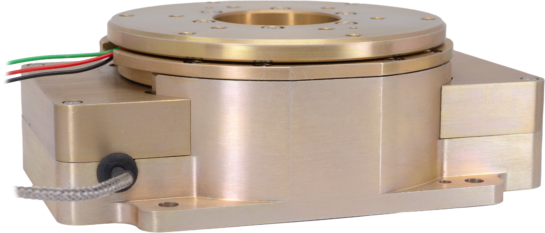
Category Archives: Uncategorized

Vacuum Compatibility and Why It Matters

The first in a series of posts co-written with ThinGap’s sister company Airex, these will go in-depth on the importance of vacuum compatibility. ThinGap has an extensive track record of supporting applications that require vacuum compatibility and low outgassing requirements, such as space and semiconductor.

Vacuum applications present a unique set of challenges for electromagnet actuation. Brushless DC motors, whether rotary or linear, are composed of materials and built by processes that do not readily make them vacuum compatible. When considering a motion system requiring vacuum, partnering with a trusted motor/motion system supplier, with a proven history in high vacuum applications, will save you time and money. Products from ThinGap and Airex have all been successful in vacuum applications within the space and semi segments for the past twenty years. This tech note will share some of their application knowledge regarding motor and motion system in vacuum environments.

To read the full post, click here.

Slotless Motors For Air Bearing Spindles

High-precision industrial spindles, such as those used in rotary stages, are crucial for applications requiring absolute precision, including semiconductor wafer processing, imaging, and inspection. Beyond the semiconductor industry, air bearing spindles are also vital in optics production, scientific research, and even automobile painting.

Air bearings, also known as fluid film bearings, utilize pressurized air to reduce friction, similar to how liquid or mechanical lubricants work. The compressed air acts as a cushion between the spindle’s rotor and stator, as well as providing stiffness, enabling highly reliable high-speed and precise movement. The complexity of predicting the performance of air bearings is rooted in nonlinear differential equations, but the benefit is seen by minimizing moving parts and wear resulting in enhance reliability. One critical design/integration aspect of air bearing spindles is the high degree of precision gained when paired with slotless motors.

Low-profile, large through hole BLDC motors are particularly suitable for spindle applications due to their large internal aperture, which accommodates optics, cabling, or prisms, while remaining compact enough for deep system integration. Another benefit of using traditional slotless or ironless stator slotless motors for air bearing spindles is architectural, due to the reduced, or in some cases, elimination of attractive forces between the rotor and stator. The lack of a stator iron enables a thinner, lighter weight, and ultimately more mass efficient spindle, saving both volume and mass.  Finally, the lack of cogging inherent in slotless motors provides a smooth rotational output and avoids even the smallest disturbance torques that can translate to the workpiece.

ThinGap’s TG Series of slotless BLDC motor kits are ideal for high-speed air bearing spindle applications due to the lack of iron in the stator, leading to zero radial and axial forces between the rotor and stator. The slotless, ironless stator delivers smooth, zero-cogging motion, making these motors perfect for spindle use. The TG Series has the added benefit of zero hysteretic and Eddy Current drag, ensuring true bidirectional repeatability in both angular and vertical movements, while also making it exceptionally efficient at high speeds. Lastly, the TG Series ironless stators boast harmonic distortion below 1%, and provide a linear current to torque output throughout the entire torque range (up to the peak torque limit) reducing servo induced disturbance and ultimately improving torque, and velocity control.

ThinGap’s TG Series of slotless motor kits stands out as an industry leader for air bearing spindle applications. With standard kits ranging from 29 to 190 mm in outer diameter and continuous torque outputs from 0.14 to 9.46 N-m, these motors are always cogless, low-profile, large through hole, and high in power density. Available in standard and modified configurations, ThinGap’s TG Series is the optimal choice for air bearing spindle motors.

ThinGap, Xiomas, and the Future of Aerial Fire Monitoring

The increased frequency of massive wildfires, capable of inflicting billions of dollars in damages annually, demands enhanced technology to combat the threat. The innovators at Xiomas Technologies, headquartered in Ann Arbor, Michigan, strive to empower humanity in the battle against these catastrophic forces with cutting-edge systems and advanced imaging technology.

Xiomas is developing advanced high-resolution imaging instruments that will help map wildfires in greater detail to aid firefighters with coordination and safety when battling these large fires. Current wildfire imaging technology captures fire data in infrared wavelengths to map the ground temperatures and cut through the smoke, and typically operate at altitudes around 10,000 feet, which only gives a 6 mile wide field of view for each pass, which represents a limiting factor.

Xiomas’s Thermal Mapping and Measurement Sensor (TMMS) is the latest evolution of their high altitude fire mapping sensor. Designed to operate at around 40,000 feet, the Xiomas sensor captures a 16 mile wide path, resulting in triple the ground coverage in a single pass and without compromising critical resolution and data collection.

Despite operating at much higher altitudes than contemporary infrared sensors, TMMS can create an image with the same ground resolution as current technology by creating a mosaic of many smaller images and patching them together in software to create a much larger image. Xiomas’ goal is to create a more efficient airborne sensor to reduce operation costs, decrease flight time, and increase coverage to better help firefighters on the ground.

Xiomas’ technology has attracted the attention of NASA, who have funded the development and testing of a few generations of thermal mapping instruments, the WAI (Wide Area Imager), TMAS (Thermal Mapping Airborne Simulator), TBIRD (Three Band IR Detector), and now the TMMS sensors. Set to begin testing by NASA in Fall 2024 aboard their ER-2 High-Altitude Airborne Science Aircraft derived from the famous U-2 spy plane, Xiomas is hoping to expand the TMMS sensor to be integrated into satellites in the next few years.

The ThinGap-designed turnkey assembly integrates one of its slotless motor with an optical encoder and bearing set into a precision aluminum housing.

At the heart of the Xiomas’s TMMS is the Across-Track Scanner, which is built around a custom motor assembly and ThinGap’s OTS LSI 75-12 Brushless DC motor. The ThinGap engineered assembly is based on a cog-free, low profile “slotless” motor integrated into a precision-machined aluminum housing, with a high resolution optical encoder, pre-loaded bearing set, and paired with a high-PWM, low-inductance controller, all of which drives a lightweight scan mirror.

The TMMS sensor has a 110 degree field of view, enabled by each 5.85 degree movement of the scan mirror, which triggers the camera to take an image. The ability to deliver a framed assembly (link to modified/custom page) based off an off-the-shelf motor kit with is another example of ThinGap’s ability to deliver an optimized, yet cost and budget effective turnkey motor assembly for rapid customer integration.

Many members of ThinGap’s team have been directly affected by the wind-driven brushfires that Southern California is famous for, so the ability to directly contribute to community safety is a matter of pride.

To learn more about Xiomas Technologies, please visit their website.

ThinGap’s Capabilities and Credentials

ThinGap stands atop a proud 25-year history supporting customers in aerospace and other precision industries. The ability to serve such a diverse customer base is due to ThinGap’s heritage and unique capabilities as an organization. In May of 2022, it became part of the greater Allient organization (formerly named Allied Motion).

Since 1999, ThinGap has developed hundreds of motor designs, and shipped thousands of motors to customers ranging from NASA to Fortune 500 companies, and even top Formula 1 teams. One of the key enabling factors is the close integration of production, engineering, and operations within a single location.

ThinGap’s ability to rapidly react to customer needs is reflected in sample quantity products often shipping within a week or less, with a ramp to production volumes in 3-4 months. Additionally, preliminary custom electro-magnetic designs and space-claim CAD models are available in 48 hours, with first deliveries often happening in 9-12 months from project kickoff. Because of ThinGap’s advanced analytical modelling, final designs are promised to be within 95% of predicted performance. Well defined production processes, 3D-printed tooling, refined modeling, and analytical tools all contribute to the ability to quickly support customers in a fast paced marketplace.

ThinGap has the capability to take any off-the-shelf motor kit and modify it to the customer’s exact requirements for both its LS and TG Series, such as winding changes, or environmental conditions like space-rating or submergible applications. Modified and custom motor designs address the need for very specific performance specifications, operational requirements, cost optimized solutions, and unique form factors that may be required for a given project.

Additionally, ThinGap has the in-house capability to design and manufacture framed or housed motor assemblies as a pre-integrated solution. Housed and framed assemblies enable more cost-effective, turnkey solutions desired by programs with tight schedules which need to be able to rapidly integrate a motor into a system.

To learn more about ThinGap’s capabilities, please reach out for further information.

Zero-Cogging Slotless Motors For Medical Robotics

While a majority of ThinGap’s motor kits are destined for airborne or spaceborne applications, the same attributes that help serve aerospace customers also are desirable for many medical applications. Smooth, zero-cogging, high precision motor kits, such as ThinGap’s are ideal for not only surgical robotics, but diagnostic and imaging equipment as well.

Modern surgical robotics systems require precise, exacting movement with no chance for mechanical disturbances to ensure the highest level of patient care. Zero-cogging motor kits are the ideal solution for true and accurate operator haptic feedback, as well as precision actuation. ThinGap’s TG Series motor kits have been used for haptic feedback for a surgical robotic system, due to the lack of both hysteretic drag afforded by the ironless motor architecture, enabling true force feedback without any disruptions.

ThinGap’s LS Series has seen integration in high-precision robotics due to the motor architecture’s extremely smooth, highly precise motion. Additionally, low profile motion solutions with a large internal aperture are desired for the ability to route optics or cabling through the center as part of deep system integration.

ThinGap’s motor kits have near zero Eddy-current, low or zero hysteretic drag, and a harmonic distortion of less than 1%, so torque output is directly proportional to current throughout the operating range, as well as providing smooth, zero-cogging motion. Additionally, ThinGap has maintained a long-standing relationship with a leading surgical robotics manufacturer supplying motors, and regularly works with other medical industry OEMs to produce tailor-made solutions that meet regulatory approval.

NASA Makes First Images and Data From PACE Public

In recognition of Earth Day, ThinGap is excited to share NASA’s public release of data from the recent PACE Mission.

Image Credit: NASA

Launched in February, PACE is a mission to study the Earth’s oceans and atmosphere, and marks the first time ThinGap motors have received NASA flight certification. ThinGap supplied its LS Series motors that drive the satellite’s main instrument, the Ocean Color Instrument (OCI).

Read the full blog here


Everything To Know About PACE, ThinGap’s First NASA Mission

Scheduled to launch early in the morning on February 6, 2024 from Kennedy Space Center aboard a SpaceX Falcon 9 rocket, the PACE Mission marks the first time ThinGap has achieved flight certification by NASA. PACE is a NASA mission that ThinGap has been proud to support. Developed and produced by NASA Goddard Space Flight Center in Maryland, PACE is a planned decade-long mission to study the Earth’s oceans and atmosphere.

The PACE launch is scheduled for 1:35 a.m. EST.  In attendance to witness the historic event firsthand will be representatives from ThinGap’s management and engineering teams.  In 2021, ThinGap supplied custom made LS Series motor kits to the development team at NASA Goddard.  These motors were designed to be integrated into the PACE Mission’s Ocean Color Instrument or OCI sensor payload.

The goal of the PACE mission is the monitoring of worldwide oceanic health through observation of the color of the ocean’s surface, as well as how reflected sunlight interacts with the atmosphere. The color of surface water is heavily influenced by sunlight’s interaction with chlorophyll, a green pigment found in plants as well as the phytoplankton that inhabit the ocean. Designed and built by NASA Goddard, the heart of the OCI (Ocean Color Instrument) is an advanced hyperspectral optical spectrometer, capable of measuring the color of the ocean from ultraviolet, through visible color, to short-wave infrared wavelengths. Previous NASA satellites have been limited to studying a small portion of this spectrum, so a single instrument being able to capture more data than before is a huge benefit to researchers. ThinGap supplied custom LS Series motors to NASA in 2021 that drive the continuously rotating cross-track telescope.

The two other payloads aboard PACE are polarimeters intended to measure how sunlight reflected by the Earth’s surface interacts with clouds, aerosols, and the ocean surface. The first is SPEXone, designed and built by a Dutch team including Airbus Defense & Space, Netherlands Institute for Space Research, and supported by the Netherlands Organization for Applied Scientific Research is designed to characterize particles suspended in the atmosphere by chemical composition and their impacts on climate change.

The other polarimeter aboard PACE, designed and built by University of Maryland Baltimore County’s Earth and Space Institute is HARP2 (Hyper-Angular Rainbow Polarimeter) sensor. HARP2 is a wide-angle imaging polarimeter designed to measure the properties of atmospheric particles, including their size, distribution, shape, and density. Previous HARP instruments have been flown on both airborne platforms as well as CubeSats, which helped influence the design of HARP2.

ThinGap is honored to support this mission by supplying custom motors, as well as achieving flight certification. Additionally, ThinGap has supplied more than 2,500 motor kits in support of a major commercial constellation, as well as US Space Force projects for prime customers.

Zero-Cogging Motors For Precision Underwater Applications

Seventy percent of the Earth’s surface is covered in water. Whether for defense, industry or exploration, the demand of underwater systems, such as manned submersibles, Remotely Operated Vehicles (ROVs), and Unmanned Underwater Vehicles (UUVs) is a market that is expected to grow to more than $10 billion by the 2030s, according to Emergen Research.  These underwater platforms of all forms stand to leverage the benefits of ThinGap’s high efficiency motor kits. With critical functions such as robotic actuation and quiet, yet highly efficient propulsion, ThinGap’s motors continue to find a home in marine and subsea applications.

An emerging use for ThinGap’s brushless DC motors is marine propulsion. ThinGap motors are ideal for underwater direct drive thrusters because of a high torque-to-diameter ratio. ThinGap recently delivered a floodable motor assembly based off its LS Series to a defense customer for a UUV application. With no gearbox, there are no drivetrain losses, enabling lower assembly weight, increased torque, and greater reliability.

As a flooded motor, ThinGap’s stator has the added benefit of inherent cooling from the cold seawater.  In addition, the thin profile of the slotless stator architecture provides less fluid resistance than more traditional actuators.  Mechanically speaking, the ring architecture allows propulsion to be directly outside of the rotor (propeller), or inside (impeller). High motor efficiency, low-noise underwater thrusters are ideal for the fast growing ROV, UUV, and AUV market segments.

With more than two decades of experience in the design and production of slotless motor kits, ThinGap leverages its proven designs to deliver engineered solutions to support both commercial and defense applications underwater. With standard products ranging in size from 25 mm to 393 mm in outer diameter, ThinGap’s highly scalable motor technology can be modified to fit any environmental requirement.

How A Flight-Qualified Watch Helped Save Apollo 13

Fourteen seconds. That is the amount of time that the crew of Apollo 13 was instructed by NASA’s Mission Control to fire their Lunar Lander’s descent engine to return their damaged spacecraft back to Earth. With the ailing spacecraft being 60-80 miles off-course, this was the critical “push” that the crew needed to correct their return trajectory. The inside of the command module was close to freezing due to most onboard systems being shut down to conserve energy, including the onboard digital timer. With the odds stacked against the crew, it was up to a mechanical backup to time the engine burn – – Astronaut Jack Swigert’s Omega Speedmaster wristwatch. While the availability of a backup seems so obvious as to be an afterthought, it was in fact a decision that had been qualified by NASA five years earlier.

Flight qualification is a process by which components intended for space are subjected to a variety of conditions intended to replicate the harsh environment outside the atmosphere, not limited to vacuum, temperature, and shock. These tests are designed to push systems to their very limits to ensure functionality, an achievement that ThinGap motors have accomplished in support of an upcoming NASA mission.  Qualifying anything for use in space, whether it be a ThinGap brushless DC motor or a commercially made Omega wristwatch, is an important and complex process.

The story of the watch that saved Apollo 13 began nearly a decade earlier, with Mercury-Atlas 8 in October 1962. In the early days of manned spaceflight, astronauts were not issued watches, and instead were permitted to wear their personal timepieces. For Mercury-Atlas 8, test pilot and astronaut Wally Schirra wore his Omega Speedmaster, beginning what became a long relationship between Omega Watches and NASA.

With America’s lofty goal of fulfilling recently assassinated President John F. Kennedy’s dream of landing a man on the Moon by the end of the 1960s, no detail was overlooked, including the astronauts’ watches. By the time NASA was ready to select a watch for the Apollo program in 1965, they issued a solicitation to a handful of watchmakers based off of astronaut feedback, with ultimately only three makers responding: Omega, Rolex, and Longines.

With the three brand of watches procured for evaluation, it came time to test them in the most scientific way possible… to destruction, with the following flight certification regiment having been pulled from historical documents:

      1. High Temperature– 48 hours at a temperature of 160°F (71°C) followed by 30 minutes at 200°F (93°C). For the high temperature tests, atmospheric pressure shall be 5.5 psi (0.35 atm) and the relative humidity shall not exceed 15%.
      2. Low Temperature –Four hours at a temperature of 0°F (-18° C)
      3. Temperature Pressure Chamber – pressure maximum of 1.47 x 10exp-5 psi (10exp-6 atm) with temperature raised to 160°F (71°C). The temperature shall then be lowered to 0°F (-18°C) in 45 minutes and raised again to 160°F in 45 minutes. Fifteen more such cycles shall be completed.
      4. Relative Humidity –A total time of 240 hours at temperatures varying between 68°F and 160°F (20°C and 71°C, respectively) in a relative humidity of at least 95%. The steam used shall have a pH value between 6.5 and 7.5.
      5. Pure Oxygen Atmosphere –The test item shall be placed in an atmosphere of 100% oxygen at a pressure of 5.5 psi (0.35 atm) for 48 hours. Performance outside of specification tolerance, visible burning, creation of toxic gases, obnoxious odors, or deterioration of seals or lubricants shall constitute a failure. The ambient temperature shall be maintained at 160°F (71°C).
      6. Shock –Six shocks of 40g each, in six different directions, with each shock lasting 11 milliseconds.
      7. Acceleration –The test item shall be accelerated linearly from 1g to 7.25g within 333 seconds, along an axis parallel to the longitudinal spacecraft axis.
      8. Decompression –90 minutes in a vacuum of 1.47 x 10E-5 psi (10 E-6 atm) at a temperature of 160° F (71° C), and 30 minutes at a 200° F (93°C).
      9. High Pressure –The test item shall be subjected to a pressure of 23.5 psi (1.6 atm) for a minimum period of one hour.
      10. Vibration –Three cycles of 30 minutes (lateral, horizontal, vertical, the frequency varying from 5 to 2000 cps and back to 5 cps in 15 minutes. Average acceleration per impulse must be at least 8.8g.
      11. Acoustic Noise –130dB over a frequency range from 40 to 10,000 HZ, for a duration of 30 minutes.

As if the torturous and destructive test routine wasn’t enough, the watches were subsequently required to retain their accuracy within 5 seconds a day. The Speedmaster was the winner by default, with the Longines and Rolex having failed at the beginning of the first temperature test. Despite being the victor, the Speedmaster was still worse for wear, with all the luminous paint on the dial having crumbled off, yet its workings remained accurate to within an impressive 4 seconds a day.

The Omega Speedmaster has changed very little cosmetically since it’s 1957 introduction

The reasons for the Omega Speedmaster’s durability ultimately comes down to a simple, yet robust mechanical movement inside, as well as a rugged, yet elegant case that envelops it. Introduced in the late 1950s for use in motorsports, the Omega Speedmaster is a hand-wound chronograph (a watch with an integrated stopwatch function) with a minimalist black dial with white markings and protected by a domed bubble acrylic watch glass. The Speedmaster had become a favorite amongst pilots due to the highly reliability, legibility, and most importantly, the accuracy it possessed.

Ed White on a spacewalk during Gemini 4

With the Speedmaster now qualified for all manned space missions and extravehicular activities, they became standard issue to NASA’s crews.  In June 1965, Ed White wore his on the first American spacewalk during Gemini 4. When Apollo 11 landed on the Moon in July 1969, mission commander Neil Armstrong left his in the Lunar Lander to serve as a backup timer as the Lander’s internal electronic timer had malfunctioned. However, Buzz Aldrin chose to affix his for the moonwalk, making the Speedmaster the first watch worn on the Moon.

Buzz Aldrin in the Lunar Module ahead of lunar landing

Despite its previous widescale acceptance by the aeronautical community, the Speedmaster’s defining moment came during Apollo 13 in April 1970, after an exploded oxygen tank crippled the Apollo Lunar Module en-route to the Moon. With their vehicle critically damaged, making their lunar mission impossible, the astronauts agreed to forsake all creature comfort, and powered down all support systems, except for basic life support, including the digital mission timer to save power. Jack Swigert’s manual 14 second burn, timed on the watch, ensured that their freezing capsule re-entered the at the right angle, instead of their trajectory which would have bounced them off the Earth’s upper atmosphere and back into space.

Astronaut Jack Swigert during spacesuit fitment

The Speedmaster flew with NASA for the rest of the Apollo moon missions, and subsequent NASA programs. When Apollo-Soyuz, the first international space flight, flew in 1976, both the American astronauts and Soviet cosmonauts were seen wearing Speedmasters–an interesting detail given that cosmonauts had previously worn exclusively Soviet-made watches as a way to promote their domestic industry and were regularly worn aboard the Mir Space Station.

The Speedmaster was re-certified by NASA in 1978 for the Space Shuttle program, yet again undergoing the same rigorous regime. Through the Shuttle program, the Speedmaster remained standard issue for all astronauts, and in the 1990s, NASA and Omega collaborated on a clean-sheet watch, designed with the needs of modern astronauts in mind. This joint venture resulted in the Speedmaster X-33, which saw the purely mechanical watch upgraded to a modern, battery-powered computerized watch. Despite being superseded by a modern replacement, the original Speedmaster has still been seen worn aboard the International Space Station.
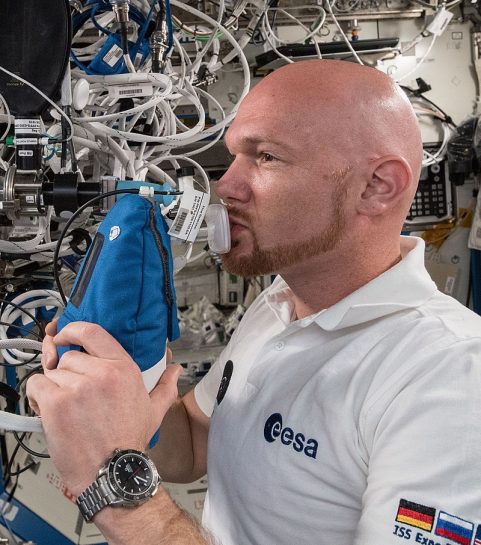
German Astronaut Alexander Gerst is seen wearing his Speedmaster X-33 aboard the International Space Station

To this very day, one can walk into a jeweler and buy a watch that is cosmetically and functionally identical to what has been flown since 1962. In fact, from the mid-1960s onward, the caseback of every Omega Speedmaster Professional (affectionately referred to as the Moonwatch) bears the inscription “Flight-Qualified By NASA In 1965 For All Manned Space Missions-The First Watch Worn On The Moon”.


1970s Omega print ads detailing the Speedmaster’s involvement with NASA and the Apollo program

ThinGap has supplied flight-qualified motors to NASA in support of their upcoming PACE mission. Focused on monitoring the overall health of worldwide oceans and atmosphere by monitoring the color of the seawater, PACE is set to launch in February 2024 from Kennedy Space Center. ThinGap is honored to support this mission by supplying custom LS Series slotless motors that drive the satellite’s primary sensor, the Ocean Color Instrument. Additionally, ThinGap has supplied more than 2,500 motor kits in support of a major commercial constellation.

Works Cited:

OMEGA and Apollo 13 – The 14 critical seconds between success and failure

NASA Testing Regime for the Omega Speedmaster Moonwatch

Apollo 13 — A Life-Saving Fourteen-Second Burn Timed With The Omega Speedmaster Professional

A Watch Made for Space but Ready for Anything

Actual Pictures Actually Showing The Speedmaster Professional Actually Being Used For EVA, Today (Well, In 2014)

Watches used in space exploration

H-LSI 267-32 Demos ThinGap’s Motor Assembly Capabilities

Designed around a low profile cogless motor with an optical encoder, precision bearing set, and anodized aluminum housing, the unit is for use in a ground-based NASA optical platform.

ThinGap recently shipped a housed version of its LSI 267-32 motor kit to a commercial customer in support of a ground-based NASA application, adding to the list of successful deliveries of housed units. Built around the company’s slotless 267 mm outer diameter BLDC motor kit, the H-LSI 267-32 integrates the high performance motor with a precision bearing set, and an optical encoder into a lightweight, Chem Film coated aluminum housing.

As a turnkey solution designed for a ground-based optical platform, this unit adds to ThinGap’s repertoire of housed and framed motor assemblies. The assembly measures 282 mm in diameter, with an axial height of 86 mm, and an internal aperture of 190 mm; the whole assembly weighs in at 8.34 kg (18.4 Lbs.), and produces a continuous torque output of 12.5 N-m, with a peak 1-second torque of 184 N-m.

Customers often come to ThinGap in need of a motor kit, wanting to take advantage of the low-profile, lightweight, and frameless architecture that is ideal for deep system integration. Yet, the time and cost of developing a housed solution are not lost on program managers and developers, so the availability of a ThinGap-led, fully engineered direct drive assembly provides a tangible advantage.

Beyond zero cogging, ThinGap’s air core motor kits have near zero Eddy current, and a harmonic distortion of less than 1%, so torque output is directly proportional to current. The resulting smooth motion and linear output makes them perfect for use in precision applications. ThinGap’s LS Series of slotless motor kits range in size from 25 to 267 mm in diameter, torque from 0.1 to 12 N-m continuous, and voltages from 24-400 volts.

For additional information on custom motor development, please contact the company at [email protected] or visit www.thingap.com.